
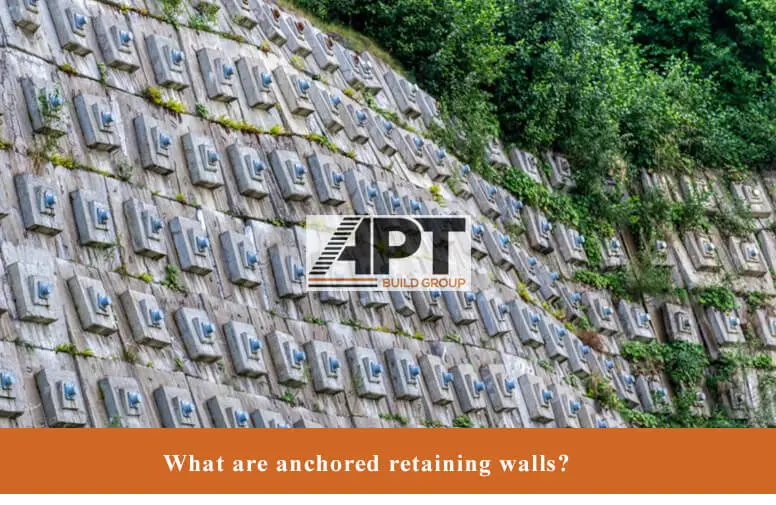
What Are Anchored Retaining Walls?
Anchored retaining walls are specialised structural systems designed to stabilise soil by combining a retaining wall with additional reinforcement elements known as anchors or tiebacks. Unlike conventional gravity or cantilever retaining walls that rely primarily on their own weight or base structure, anchored walls gain extra strength from cables, rods, or tendons driven deep into the retained soil or rock behind the wall. This method allows the wall to resist higher lateral earth pressures, making anchored retaining walls ideal for challenging sites, restricted spaces, and projects requiring enhanced stability.
Anchored retaining walls are widely used in civil engineering, commercial construction, infrastructure projects, and complex residential developments where soil conditions, load requirements, or space limitations make traditional retaining solutions insufficient.
How Anchored Retaining Walls Work
The defining feature of an anchored retaining wall is its anchoring system. Steel tendons, bars, or cables are drilled through the wall and extended into stable soil strata or bedrock. Once installed, these anchors are tensioned, effectively “tying” the wall back into the ground. This tension counteracts the pressure exerted by the retained soil, improving structural performance and reducing wall movement.
By redistributing loads into deeper, more stable layers, anchored walls can be constructed with slimmer profiles compared to gravity walls. This makes them especially valuable in areas where excavation space is limited or where tall retaining structures are required.
Key structural principles involved include:
- Lateral earth pressure resistance
- Soil reinforcement and stabilisation
- Load transfer to competent ground layers
- Reduction of bending and overturning forces
Components of Anchored Retaining Walls
Anchored retaining walls consist of several interconnected elements that work together to maintain stability and safety.
Retaining Wall Structure
The visible wall may be constructed from reinforced concrete, shotcrete, sheet piles, soldier piles, or precast panels. Its role is to retain soil and distribute loads to the anchoring system.
Anchors or Tiebacks
Anchors are steel components inserted into drilled holes behind the wall. They are typically grouted into place to ensure long-term bonding and corrosion protection.
Grout Body
Cementitious grout surrounds the anchor, securing it within the soil or rock while providing additional strength and durability.
Drainage System
Proper drainage is critical. Without it, hydrostatic pressure can build up behind the wall, increasing loads and risking failure. Drainage layers, weep holes, and geocomposite drains are often incorporated.
Facing and Surface Treatments
Depending on the design, anchored walls may include decorative finishes, textured surfaces, or architectural cladding.
Types of Anchored Retaining Walls
Anchored retaining walls can be adapted into various structural forms depending on site conditions and engineering requirements.
Anchored Sheet Pile Walls
Common in waterfront, marine, or deep excavation projects. Anchors enhance the load-bearing capacity of thin sheet piles.
Anchored Concrete Walls
Reinforced concrete walls combined with tiebacks are frequently used for high-load applications and tall retaining systems.
Soldier Pile and Lagging Walls
Steel piles installed vertically with horizontal lagging panels, reinforced by anchors for added stability.
Shotcrete Anchored Walls
Sprayed concrete applied to stabilised soil faces, strengthened by tensioned anchors.
Each variation serves different geotechnical and structural needs while following the same core principle of anchor-based reinforcement.
Advantages of Anchored Retaining Walls
Anchored retaining walls offer several practical and engineering benefits that distinguish them from traditional retaining systems.
Higher Load Capacity
Anchors allow the wall to resist greater lateral earth pressures and surcharge loads.
Slimmer Structural Profile
Reduced wall thickness compared to gravity walls, saving space and materials.
Suitable for Tall Walls
Effective for projects requiring significant retained heights.
Adaptability to Difficult Sites
Ideal for restricted spaces, steep slopes, and unstable soil conditions.
Improved Stability
Anchors reduce wall deflection, settlement, and movement risks.
Efficient for Deep Excavations
Commonly used in basement construction, tunnels, and infrastructure works.
Common Applications of Anchored Retaining Walls
Anchored retaining walls are commonly chosen for projects where soil pressure management and structural stability are critical.
Typical uses include:
- Deep excavations and basement construction
- Bridge abutments and infrastructure support
- Highway and railway cuttings
- Steep slope stabilisation
- Coastal and waterfront structures
- Commercial and industrial developments
Their ability to function effectively under demanding conditions makes them a preferred solution in complex engineering scenarios.
Design Considerations for Anchored Retaining Walls
Proper design of anchored retaining walls requires detailed geotechnical analysis and structural engineering expertise. Several factors influence performance and safety.
Soil Conditions
Engineers evaluate soil type, shear strength, bearing capacity, and groundwater presence.
Anchor Capacity and Spacing
Anchor design must account for tensile loads, bond strength, and long-term durability.
Drainage and Water Pressure
Hydrostatic pressure control is essential to prevent excessive loads.
Wall Height and Geometry
Higher walls require careful load distribution and reinforcement planning.
Construction Sequence
Installation stages must maintain stability during excavation and tensioning.
Failure to address these aspects can lead to structural issues, excessive movement, or safety risks.
Installation Process Overview
The construction of anchored retaining walls follows a systematic approach to ensure structural integrity.
- Site investigation and soil testing
- Excavation and wall installation
- Drilling of anchor holes
- Placement and grouting of anchors
- Anchor tensioning and locking
- Drainage system installation
- Final wall finishing
Precision during drilling and tensioning is particularly important, as anchor performance directly affects wall stability.
Maintenance and Durability
Anchored retaining walls are designed for long-term performance, but periodic inspections are recommended. Maintenance typically focuses on:
- Monitoring wall movement or cracking
- Checking drainage effectiveness
- Inspecting exposed hardware
- Evaluating anchor system integrity
Modern corrosion protection methods and high-quality materials significantly improve lifespan and reliability.
Are Anchored Retaining Walls Right for Every Project?
While anchored retaining walls offer exceptional strength and flexibility, they are not always the most economical solution for small or low-load applications. Simpler systems such as gravity walls or segmental block walls may suffice where soil pressure is minimal and retained heights are low.
Anchored walls are most beneficial when:
- Retained heights are significant
- Space constraints exist
- Soil pressures are high
- Ground conditions are complex
- Structural loads are demanding
Consulting a qualified retaining wall specialist or structural engineer is crucial to determine the most appropriate design.
Final Thoughts
Anchored retaining walls represent an advanced and highly effective retaining solution for complex construction environments. By integrating engineered anchors with a structural wall system, these walls provide superior stability, reduced structural mass, and enhanced performance under challenging soil conditions.
Whether used in large-scale infrastructure or technically demanding residential projects, anchored retaining walls play a critical role in modern geotechnical engineering and safe land development.
FAQs on the topic “What Are Anchored Retaining Walls?”
What is an anchored retaining wall?
An anchored retaining wall is a structural retaining system that uses anchors or tiebacks (usually steel cables or rods) embedded deep into the soil or rock behind the wall. These anchors provide additional support, allowing the wall to resist higher soil pressures and remain stable under challenging conditions.
How do anchors strengthen a retaining wall?
Anchors work by transferring loads from the retaining wall into stable ground layers behind it. Once tensioned, they counteract lateral earth pressure, reducing wall movement, bending forces, and the risk of structural failure.
Where are anchored retaining walls commonly used?
Anchored retaining walls are often used in deep excavations, steep slopes, bridge abutments, highways, commercial developments, and areas with limited construction space. They are ideal when traditional retaining walls cannot handle the required loads.
What types of anchors are used in anchored retaining walls?
Common anchor types include steel tiebacks, ground anchors, rock anchors, and helical anchors. The choice depends on soil conditions, load requirements, and project design considerations determined by engineers.
Are anchored retaining walls suitable for residential projects?
Yes, anchored retaining walls can be used in residential settings, particularly for sloping blocks or properties requiring tall retaining structures. However, they are typically recommended when simpler retaining solutions are not sufficient.
How deep are retaining wall anchors installed?
Anchor depth varies depending on soil stability and design loads. In many projects, anchors extend several metres into the ground to reach competent soil or rock layers capable of providing reliable support.
Do anchored retaining walls require drainage systems?
Yes, proper drainage is essential. Without adequate drainage, water buildup behind the wall can increase hydrostatic pressure, potentially compromising structural stability. Drainage layers, weep holes, and subsoil drains are commonly installed.
Are anchored retaining walls expensive compared to other wall types?
Anchored retaining walls generally involve higher construction costs due to specialised drilling, materials, and engineering requirements. However, they can be more cost-effective for large or complex projects where alternative solutions may fail.
How long do anchored retaining walls last?
With proper design, corrosion protection, and maintenance, anchored retaining walls can last several decades. Durability largely depends on material quality, environmental conditions, and ongoing inspections.
Do anchored retaining walls need maintenance?
Yes, periodic inspections are recommended to monitor wall alignment, drainage performance, and anchor integrity. Maintenance helps identify early signs of movement or wear, ensuring long-term structural safety.
Read more articles:
What are anchored retaining walls? | What Is a Cantilever Retaining Wall? | Semi Gravity Retaining Wall