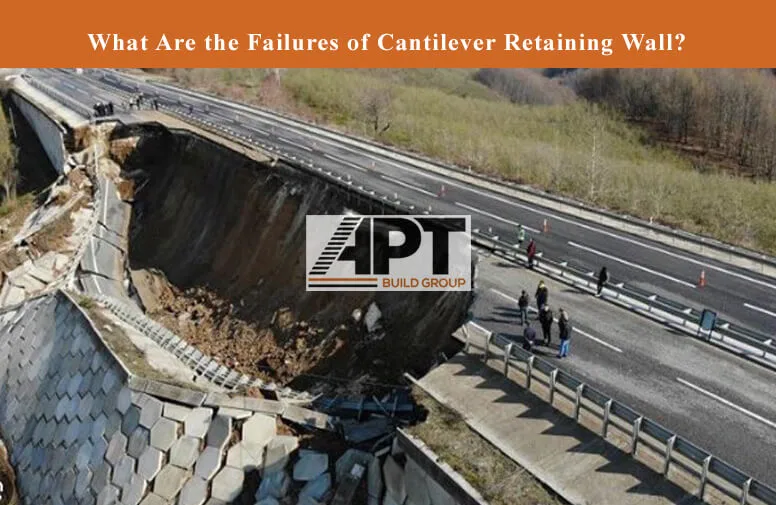
What Are the Failures of Cantilever Retaining Wall?
Cantilever retaining walls are widely used in civil engineering and construction projects to support soil at different elevations. These reinforced concrete structures are designed to resist lateral earth pressure using a cantilever action between the wall stem and the base slab. They are commonly used in highways, basements, landscaping, and infrastructure developments because of their efficiency and relatively economical design for medium heights.
However, like any structural element, a cantilever retaining wall can fail if it is poorly designed, incorrectly constructed, or subjected to unexpected loads. Understanding the possible failure modes of these walls is essential for engineers, contractors, and construction companies such as APTBuildGroup, who aim to deliver durable and safe structural solutions.
This article explains the common types of failures in cantilever retaining walls, their causes, and how they can be prevented.
Introduction What Are the Failures of Cantilever Retaining Wall?
A cantilever retaining wall is a reinforced concrete wall that consists of three main components: the stem, heel slab, and toe slab. The soil pressure acting on the wall is resisted through the weight of the wall and the soil above the base slab. The design relies heavily on structural reinforcement and proper geotechnical analysis.
These walls are generally used for heights between 3 to 8 meters, and they must be carefully designed to resist sliding, overturning, and soil pressure forces.
When any of the design assumptions or construction practices are compromised, structural failure may occur.
Major Failures of Cantilever Retaining Wall
Overturning Failure
Overturning is one of the most common failure modes in cantilever retaining walls. It occurs when the lateral earth pressure behind the wall becomes greater than the stabilizing moment provided by the wall’s weight and the soil above the base slab.
In this condition, the wall rotates about the toe of the foundation, causing the top portion of the wall to lean outward.
Causes of overturning include:
- Excessive earth pressure
- Increased water pressure behind the wall
- Insufficient base width
- Poor design calculations
If overturning is not addressed early, it may lead to complete structural collapse.
Sliding Failure
Sliding occurs when the horizontal forces acting on the retaining wall exceed the frictional resistance between the base slab and the foundation soil.
This type of failure results in the entire wall sliding forward along its base.
Common causes include:
- Low friction between the base slab and soil
- Inadequate base width
- Increased lateral soil pressure
- Earthquake or vibration loads
Proper shear keys, wider foundations, and soil stabilization techniques are typically used to prevent sliding.
Bearing Capacity Failure
Bearing capacity failure occurs when the pressure exerted by the retaining wall on the foundation soil exceeds the soil’s safe bearing capacity.
In such cases, the soil beneath the wall becomes overstressed, resulting in settlement or tilting of the wall.
Signs of bearing failure include:
- Uneven settlement
- Rotation of the wall
- Cracks in the wall structure
According to engineering studies, bearing failure is one of the major stability checks considered when analyzing cantilever retaining walls along with sliding and overturning.
Structural Failure (Bending or Shear)
Structural failure occurs when the reinforced concrete components of the wall cannot withstand bending moments or shear forces.
The stem of the wall, heel slab, or toe slab may crack or fail due to excessive stress.
This often happens because of:
- Insufficient reinforcement
- Poor concrete quality
- Incorrect structural design
- Increased loads beyond design capacity
In many cases, bending moment failure is considered the most critical failure mode in cantilever retaining walls.
Construction companies like APTBuildGroup ensure proper reinforcement placement and quality concrete to prevent such failures.
Failure Due to Hydrostatic Pressure
Water accumulation behind the retaining wall can significantly increase the lateral pressure acting on the structure.
If proper drainage systems are not provided, hydrostatic pressure may cause the wall to bulge, crack, or collapse.
Reasons for water-related failure include:
- Blocked drainage systems
- Absence of weep holes
- Poor backfill material
- Heavy rainfall or groundwater accumulation
Proper drainage layers, perforated pipes, and gravel backfill help reduce hydrostatic pressure.
Failure Due to Poor Drainage
Poor drainage is one of the leading causes of retaining wall failures.
When water accumulates in the soil behind the wall, the soil becomes heavier and exerts significantly more pressure on the structure. Saturated soil can weigh up to 50% more than dry soil, increasing the risk of failure.
This additional pressure can cause:
- Wall bulging
- Structural cracks
- Sudden collapse
Professional construction companies like APTBuildGroup prioritize proper drainage systems to ensure long-term stability.
Failure Due to Poor Design
Incorrect design is another major cause of cantilever retaining wall failure.
A wall must be designed based on several factors such as:
- Soil type
- Wall height
- Slope angle
- Water table level
- Surcharge loads
If these factors are not properly considered, the wall may be under-designed and unable to resist the forces acting on it.
Poor engineering design often results in insufficient reinforcement or inadequate foundation dimensions.
Failure Due to Poor Construction
Even a well-designed wall can fail if it is not constructed correctly.
Some common construction mistakes include:
- Improper reinforcement placement
- Low-quality materials
- Poor compaction of backfill
- Insufficient curing of concrete
Substandard construction practices weaken the structural integrity of the wall and reduce its lifespan.
This is why experienced builders like APTBuildGroup emphasize strict construction standards and supervision.
Failure Due to Soil Conditions
The type of soil behind and beneath the retaining wall plays a crucial role in its stability.
Certain soils, such as expansive clay, expand when wet and shrink when dry. This constant movement creates additional pressure on the wall.
Other soil-related issues include:
- Soil erosion
- Poor soil compaction
- Weak foundation soil
Without proper geotechnical investigation, these factors can lead to severe structural failure.
Signs of Retaining Wall Failure
Recognizing early warning signs can prevent major structural damage.
Common signs include:
- Cracks in the wall surface
- Wall tilting or leaning forward
- Bulging of the wall
- Soil leakage through joints
- Water seepage behind the wall
Early inspection and repair can significantly extend the life of the retaining structure.
Prevention of Cantilever Retaining Wall Failure
To prevent failures, several engineering practices must be followed.
Proper Structural Design
A detailed structural and geotechnical analysis must be carried out before construction.
Effective Drainage System
Drainage components such as weep holes, gravel backfill, and drainage pipes should always be included.
Quality Materials
High-quality reinforced concrete and steel reinforcement must be used.
Soil Investigation
A proper soil test should be conducted to determine bearing capacity and soil properties.
Regular Maintenance
Routine inspections help identify early signs of damage and prevent major failures.
Companies like APTBuildGroup focus on these engineering principles to ensure strong and long-lasting retaining wall structures.
Conclusion
Cantilever retaining walls are efficient and widely used structures in construction projects. However, they must be carefully designed and constructed to withstand the various forces acting on them.
The major failures of cantilever retaining walls include overturning, sliding, bearing capacity failure, structural failure, hydrostatic pressure failure, poor drainage, poor design, and soil-related issues. Each of these failures can lead to serious structural problems if not addressed properly.
With proper engineering analysis, high-quality materials, and professional construction practices, the risk of retaining wall failure can be significantly reduced. Construction specialists such as APTBuildGroup play an important role in ensuring that retaining walls are built safely, efficiently, and in accordance with modern engineering standards.
FAQs: Failures of Cantilever Retaining Wall
What are the main types of failures in a cantilever retaining wall?
The most common failures of a cantilever retaining wall include overturning, sliding, bearing capacity failure, structural cracking, and failure caused by hydrostatic pressure. These failures usually occur when the wall is not designed or constructed properly. At APTBuildGroup, careful engineering analysis is carried out to avoid these structural risks.
What causes a cantilever retaining wall to overturn?
Overturning happens when the lateral earth pressure behind the wall becomes greater than the stabilizing weight of the wall and its base. Poor design, excessive soil load, and water pressure buildup are common reasons. Proper structural calculations and foundation design help prevent this problem.
Why does sliding failure occur in retaining walls?
Sliding failure occurs when the horizontal force exerted by soil pressure exceeds the frictional resistance between the wall base and the soil. Insufficient base width, weak foundation soil, or lack of shear keys can contribute to sliding failure. Professional construction practices used by APTBuildGroup help ensure adequate resistance against sliding.
How does hydrostatic pressure cause retaining wall failure?
Hydrostatic pressure builds up when water accumulates behind the retaining wall due to poor drainage. This water increases the pressure on the wall and can cause cracks, bulging, or collapse. Installing proper drainage systems such as weep holes and drainage pipes helps relieve this pressure.
What is bearing capacity failure in a cantilever retaining wall?
Bearing capacity failure occurs when the pressure from the retaining wall exceeds the strength of the foundation soil. This can lead to settlement, tilting, or cracking of the wall. Soil testing and proper foundation design are essential to prevent this issue.
Can poor drainage lead to retaining wall failure?
Yes, poor drainage is one of the leading causes of retaining wall failure. Water buildup behind the wall increases soil weight and pressure, which may lead to structural damage or collapse. Experts at APTBuildGroup always include proper drainage solutions in retaining wall construction.
How does poor construction affect cantilever retaining walls?
Even if the design is correct, poor construction practices can lead to wall failure. Mistakes such as improper reinforcement placement, low-quality concrete, and poor soil compaction can weaken the wall structure and reduce its durability.
What are the warning signs of a failing retaining wall?
Common warning signs include cracks in the wall, leaning or tilting of the structure, bulging surfaces, soil leakage, and water seepage behind the wall. Early detection of these issues can prevent major structural problems.
How can cantilever retaining wall failures be prevented?
Failures can be prevented through proper structural design, soil testing, effective drainage systems, high-quality materials, and professional construction methods. Companies like APTBuildGroup follow strict engineering standards to ensure safe and durable retaining walls.
How long should a properly built cantilever retaining wall last?
A well-designed and properly constructed cantilever retaining wall can last between 50 to 100 years with proper maintenance. Regular inspections and timely repairs help extend the life of the structure and maintain its stability.
Read more blogs:
When Is an Anchored Retaining Wall Needed?
What Is the Anchored Wall Construction Method?
What are the advantages and Disadvantages of a cantilever retaining wall?