
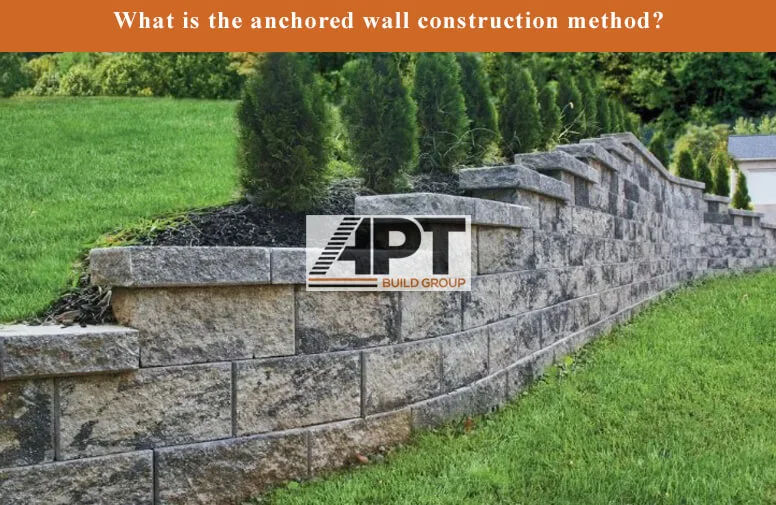
What Is the Anchored Wall Construction Method?
The anchored wall construction method is a highly effective engineering technique used to stabilise soil and support structures where ground pressure, space limitations, or challenging site conditions make traditional retaining systems unsuitable. This method combines a retaining wall with specialised reinforcement elements called anchors or tiebacks, which are installed deep into the soil or rock behind the wall. These anchors provide additional resistance against lateral earth pressure, significantly improving wall stability and structural performance.
In Brisbane and across Australia, anchored wall systems are widely used in residential, commercial, and civil construction projects that require strong, reliable ground support. APTBuildGroup Brisbane Australia designs and constructs anchored wall solutions tailored to local soil conditions, load requirements, and long-term durability needs.
Understanding the Concept of Anchored Wall Construction
Unlike gravity retaining walls that depend primarily on their own mass, anchored walls use mechanical reinforcement to achieve stability. The core principle of the anchored wall construction method involves transferring loads from the wall into stable ground layers located behind the retained soil. This is achieved by installing steel rods, tendons, or cables through the wall and securing them within competent soil or rock formations.
Once tensioned, these anchors counteract the lateral forces exerted by soil, preventing wall movement, rotation, or structural failure. This makes anchored walls particularly suitable for deep excavations, steep slopes, and projects requiring tall retaining structures.
Key Components of an Anchored Wall System
Anchored wall construction involves several structural elements that work together to maintain safety and performance. The retaining wall itself may be constructed from reinforced concrete, shotcrete, sheet piles, or soldier pile systems. Its role is to retain soil and distribute loads to the anchoring system.
Anchors or tiebacks are the defining feature of the system. These are typically high-strength steel elements installed into drilled holes extending deep into the ground. Grout is used to bond the anchor with the surrounding soil or rock, creating a secure load transfer mechanism.
Drainage systems are another critical component. Proper water management prevents hydrostatic pressure buildup behind the wall, which could otherwise increase loads and compromise stability. Drainage layers, pipes, and filters are commonly integrated into the design.
Additional elements such as facing panels, capping beams, and corrosion protection measures further enhance durability and structural reliability.
How the Anchored Wall Construction Method Works
The anchored wall construction process follows a systematic and carefully controlled sequence. It begins with site investigation and geotechnical assessment to determine soil properties, groundwater conditions, and load requirements. Accurate engineering analysis ensures the wall and anchor system are designed to handle expected pressures safely.
After excavation or initial wall installation, anchor holes are drilled at specific angles and depths. Steel anchors are inserted and secured using high-strength grout. Once the grout achieves sufficient strength, anchors are tensioned to apply controlled force, effectively stabilising the wall.
This tensioning process is essential because it activates the anchor system, allowing it to resist lateral soil pressure. Final construction stages typically include drainage installation, surface finishing, and structural inspections.
Advantages of the Anchored Wall Construction Method
Anchored wall systems offer several advantages that make them a preferred solution for complex construction environments. One of the most significant benefits is their ability to resist high lateral earth pressures. By transferring loads into deeper, more stable ground layers, anchored walls can support greater retained heights and loads compared to many traditional systems.
Space efficiency is another important advantage. Anchored walls can be constructed with relatively slim profiles, making them ideal for sites with limited space or restricted boundaries. This is particularly beneficial in urban developments and infrastructure projects.
Anchored wall construction also provides enhanced stability and reduced wall movement. The tensioned anchors limit deflection and settlement, improving long-term structural performance.
Adaptability to challenging soil conditions is another strength. Anchored walls can be designed for a wide range of ground types, including loose soils, steep slopes, and excavation sites.
Common Applications of Anchored Wall Construction
Anchored wall construction is commonly used in projects where ground stability and structural support are critical. Typical applications include deep basement excavations, slope stabilisation, bridge abutments, highway cuttings, and commercial developments.
In Brisbane, anchored walls may be selected for properties with steep gradients, limited construction space, or demanding soil retention requirements. They are also widely used in large-scale civil engineering works where structural reliability is essential.
APTBuildGroup Brisbane Australia applies anchored wall solutions across various project types, ensuring each system is designed to meet site-specific challenges.
Design Considerations for Anchored Wall Systems
Successful anchored wall construction depends heavily on accurate engineering design and geotechnical analysis. Soil properties such as shear strength, bearing capacity, and groundwater conditions must be carefully evaluated. These factors directly influence anchor capacity, spacing, and wall design.
Anchor design requires precise calculations to ensure sufficient tensile resistance and long-term durability. Corrosion protection measures are particularly important for maintaining anchor integrity over time.
Drainage design is equally critical. Water pressure can dramatically affect retaining wall loads, making effective drainage systems essential for performance and safety.
Construction sequencing must also be considered. Proper staging ensures stability is maintained throughout excavation and installation phases.
Importance of Drainage in Anchored Wall Construction
Water management plays a vital role in anchored wall performance. Without proper drainage, hydrostatic pressure can build up behind the wall, increasing lateral loads and risking structural issues. Drainage solutions such as subsoil pipes, free-draining backfill, and filtration systems help maintain safe pressure levels.
Integrating drainage into the initial design phase significantly improves long-term reliability and reduces maintenance needs.
Maintenance and Long-Term Performance
Anchored retaining walls are designed for long-term structural performance, but periodic inspections are recommended. Monitoring wall movement, drainage efficiency, and anchor system condition helps identify potential issues early.
With quality materials, proper design, and professional construction, anchored wall systems can provide decades of reliable service.
Final Thoughts about What Is the Anchored Wall Construction Method?
The anchored wall construction method is a powerful and versatile ground stabilisation technique used in modern construction. By combining structural walls with tensioned anchors, this system offers exceptional strength, stability, and adaptability for challenging sites.
While anchored wall construction requires specialised design and installation expertise, it provides an invaluable solution for projects involving high soil pressures, limited space, and complex ground conditions. APTBuildGroup Brisbane Australia delivers professionally engineered anchored wall systems designed for safety, compliance, and long-term durability, ensuring reliable outcomes for residential and commercial projects alike.
FAQs on What is the Anchored Wall Construction Method?
What is the anchored wall construction method?
The anchored wall construction method is a retaining system that uses steel anchors or tiebacks embedded into stable soil or rock behind a wall to resist lateral earth pressure and improve structural stability.
Where are anchored walls commonly used?
Anchored walls are widely used in deep excavations, basement construction, bridge abutments, steep slopes, highways, and projects with limited space or high soil loads.
How do anchors stabilise the retaining wall?
Anchors transfer loads from the wall into stronger ground layers. Once tensioned, they counteract soil pressure and prevent wall movement, rotation, or failure.
What materials are used in anchored wall systems?
Typical materials include reinforced concrete, shotcrete, steel piles, high-strength steel tendons or rods, grout, and corrosion-resistant hardware.
Are anchored walls suitable for residential projects?
Yes, anchored walls are often used for residential sites with steep gradients, tight boundaries, or complex soil conditions requiring enhanced stability.
How deep are anchors installed?
Anchor depth varies based on soil conditions and design loads, but they are generally drilled deep enough to reach stable soil or rock layers capable of resisting tension forces.
Why is drainage important in anchored walls?
Proper drainage prevents hydrostatic pressure buildup behind the wall, which could otherwise increase loads and compromise structural performance.
What are the advantages of anchored retaining walls?
Key advantages include high load resistance, space efficiency, suitability for tall walls, adaptability to challenging soil conditions, and reduced wall deflection.
Do anchored walls require maintenance?
While designed for durability, periodic inspections are recommended to monitor drainage performance, wall alignment, and anchor integrity over time.
How long do anchored retaining walls last?
With proper engineering design, quality materials, and professional installation, anchored retaining walls can remain structurally reliable for many decades.
Read more blogs:
What are anchored retaining walls?
What are the advantages of a cantilever retaining wall?
What is the anchored wall construction method?
What Is a Cantilever Retaining Wall?
Semi Gravity Retaining Wall
Design Guidance and Considerations for Retaining Wall Construction 2026
Choosing the Right Retaining Wall 2026