
Do You Need an Engineer for a Retaining Wall in Brisbane?
If you’re planning earthworks on a sloped block, chances are you’ve already asked yourself: do you need an engineer for a retaining wall in Brisbane? The short answer is yes, in most cases, and the reason comes down to one term you’ll hear constantly throughout this process — RPEQ. Understanding when a RPEQ retaining wall Brisbane certification is legally required, and why it matters even when it isn’t, can save homeowners and builders from costly rework, council rejections, and structural failures down the track.
What Is RPEQ and Why Does It Matter for Retaining Walls?
RPEQ stands for Registered Professional Engineer of Queensland. It’s a legislated title under the Professional Engineers Act, and it means the engineer who signs off on your design has met strict competency, insurance, and accountability standards set by the Queensland Board of Professional Engineers. When we talk about a RPEQ retaining wall Brisbane project, we’re referring to a structure that has been designed, or at minimum reviewed and certified, by someone holding this registration. This isn’t a box-ticking exercise. Brisbane’s clay-heavy soils, seasonal wet season saturation, and steep terrain across the inner-city and hinterland suburbs mean poorly engineered walls fail more often than most homeowners expect.
When Brisbane City Council Requires RPEQ Certification
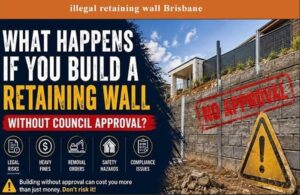
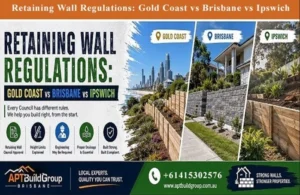
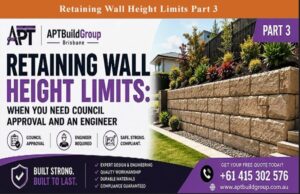
Brisbane City Council’s guidelines generally require certification once a retaining wall exceeds one metre in height, or where the wall supports a surcharge load such as a driveway, pool, or building footing. Anything retaining more than one metre of soil, or built close to a boundary, typically needs a RPEQ retaining wall Brisbane assessment before council will issue approval. Even walls under one metre can trigger the requirement if they’re stepped, tiered, or located on a site with a history of instability. Ignoring this step is one of the most common reasons Brisbane building approvals stall or get knocked back entirely.
Retaining Wall Height Rules and Council Approvals
Height isn’t the only trigger. Councils across South East Queensland also look at proximity to easements, stormwater infrastructure, and neighbouring properties. A retaining wall built without proper drainage design, for instance, can redirect water onto a neighbour’s land and create a legal dispute that has nothing to do with the wall’s structural strength. This is exactly why a RPEQ retaining wall Brisbane sign-off covers more than just “will it stand up” — it addresses drainage, load paths, soil bearing capacity, and long-term durability in one certified package.
Do You Need an Engineer for a Retaining Wall? The Risk of Skipping It
Skipping engineering advice might feel like a shortcut, but the numbers tell a different story. Uncertified walls are far more likely to bow, crack, or collapse within a few wet seasons, particularly on reactive clay sites common throughout Brisbane’s western and northern suburbs. Repairing a failed retaining wall after the fact almost always costs more than getting it right the first time, and insurers frequently decline claims linked to uncertified structural work. If you’ve ever wondered do you need an engineer for a retaining wall in Brisbane when the slope looks “manageable,” the honest answer is that visual judgement alone isn’t a reliable substitute for calculated soil and load data.
Soil Types and Site Conditions Across Brisbane Suburbs
Brisbane sits on a patchwork of soil types, from sandy alluvial river flats to expansive clay found further inland. This variability is precisely why a one-size-fits-all retaining wall design doesn’t work across the city. A RPEQ retaining wall Brisbane engineer will typically request a geotechnical report, or at minimum assess known soil conditions for the suburb, before finalising footing depths and wall type — whether that’s a gravity wall, reinforced block wall, or piered concrete design. Sites near creeks, floodplains, or steep escarpments generally need more conservative engineering than flatter blocks further from waterways.
The RPEQ Retaining Wall Brisbane Design and Certification Process
The certification process typically starts with a site inspection, followed by soil assessment, structural calculations, and finally a signed and stamped set of drawings bearing the engineer’s RPEQ number. This documentation is what you’ll submit to council or provide to your builder before construction begins. A properly documented RPEQ retaining wall Brisbane package also protects you if a dispute arises later, since it provides a clear, defensible record of the design assumptions and compliance standards used.
Cost Considerations for RPEQ Retaining Wall Brisbane Projects
Engineering fees vary depending on wall height, length, and site complexity, but they typically represent a small fraction of total project cost when weighed against the price of remediation work. Homeowners often ask whether a RPEQ retaining wall Brisbane certification is worth the added upfront spend — and the answer becomes obvious the moment you compare it to the cost of underpinning a collapsed wall, repairing a cracked driveway, or settling a boundary dispute with a neighbour. Budgeting for proper certification from the outset is simply cheaper in the long run.
Choosing the Right Retaining Wall Material for Your Site
Material choice is another decision that should follow the engineering, not precede it. Timber sleeper walls suit low-height, low-load garden retaining, but they’re rarely appropriate once a RPEQ retaining wall Brisbane assessment identifies a surcharge load or boundary proximity issue. Reinforced concrete block, poured concrete, and piered designs offer greater strength and longevity for taller or load-bearing walls, and they hold up better through Brisbane’s humid, storm-prone climate. Your engineer’s report will usually specify the material and construction method that suits your soil type, drainage plan, and budget, rather than leaving that choice purely to aesthetics.
Maintenance and Long-Term Performance
Even a correctly certified wall benefits from ongoing attention. Weep holes and agricultural drains need to stay clear of silt and debris, particularly after heavy Brisbane storms, or hydrostatic pressure can build up behind the wall and undermine its structural integrity over time. A well-documented RPEQ retaining wall Brisbane certification typically includes maintenance notes covering drainage checks, expected lifespan, and signs of movement to watch for, giving homeowners a practical reference long after construction wraps up.
Top Brisbane Suburbs for Retaining Wall Demand
Retaining wall work tends to cluster in suburbs with sloped topography, older housing stock, and active renovation markets. Based on population size and the volume of earthworks and retaining wall projects we see across the region, the following ten suburbs consistently rank among Brisbane’s busiest for retaining wall demand:
| Suburb | Why It Ranks High for Retaining Walls |
| Chermside | Major population hub with sloped residential blocks |
| Mount Gravatt | Hilly terrain, high renovation activity |
| Carindale | Established slopes, strong owner-occupier market |
| Kenmore | Elevated blocks, reactive clay soils |
| The Gap | Steep escarpment topography |
| Ashgrove | Older housing stock on sloping land |
| Kelvin Grove | Inner-city density with retaining-heavy blocks |
| Paddington | Historic hillside suburb, frequent renovations |
| Toowong | Riverside slopes and terraced lots |
| Indooroopilly | Large population base, varied elevation |
These areas combine hilly terrain with strong property turnover, which naturally drives demand for properly engineered retaining structures.
Why APT Build Group Is Brisbane’s Trusted RPEQ Retaining Wall Partner
As APT Build Group best retaining walls company in Brisbane, Queensland Australia, we coordinate directly with RPEQ-registered engineers on every project that requires certification, so clients never have to manage that process themselves. Our team has worked across almost every suburb listed above, which means we already understand the soil behaviour, council requirements, and drainage challenges specific to each pocket of the city. When people ask us do you need an engineer for a retaining wall in Brisbane, our answer is grounded in years of on-the-ground experience, not guesswork. We manage the RPEQ retaining wall Brisbane approval process from first site visit through to final council sign-off, and we build every wall to the specification the engineer provides — no shortcuts, no guesswork.
Choosing a builder who understands both construction and compliance matters. As APT Build Group best retaining walls company in Brisbane, Queensland Australia, we’ve seen firsthand how much easier a project runs when engineering and construction teams communicate from day one, rather than after a council rejection forces a redesign. This coordinated approach is a big part of why homeowners across Brisbane’s inner and outer suburbs keep coming back to us for their earthworks and retaining wall projects.
Final Thoughts: Do You Need an Engineer for a Retaining Wall in Brisbane?
So, do you need an engineer for a retaining wall in Brisbane? In almost every practical scenario involving height, load, or proximity to a boundary, the answer is yes. A RPEQ retaining wall Brisbane certification isn’t red tape for its own sake — it’s the difference between a structure that holds up through decades of Queensland storms and one that becomes an expensive liability. As APT Build Group best retaining walls company in Brisbane, Queensland Australia, we’d rather walk you through the requirements upfront than have you discover them the hard way. If you’re planning a sloped block project anywhere in Brisbane or South East Queensland, get in touch with our team and we’ll manage the RPEQ retaining wall Brisbane process from start to finish.
As APT Build Group best retaining walls company in Brisbane, Queensland Australia, our promise is simple: every wall we build is backed by proper engineering, proper drainage, and proper council approval, because that’s what actually protects your property long term. As APT Build Group best retaining walls company in Brisbane, Queensland Australia, we’re proud to be the team so many local homeowners trust with exactly this question — do you need an engineer for a retaining wall in Brisbane — and we’re always happy to answer it in plain language, free of jargon, before a single shovel goes into the ground.
Frequently Asked Questions
Do you need an engineer for a retaining wall in Brisbane?
In most cases, yes. Brisbane City Council generally requires certification for any retaining wall over one metre in height, or one that supports a surcharge load such as a driveway, pool, or building. A RPEQ retaining wall Brisbane sign-off confirms the design meets structural and drainage standards.
What does RPEQ actually stand for?
RPEQ stands for Registered Professional Engineer of Queensland, a legislated title issued by the Board of Professional Engineers Queensland to engineers who meet strict competency and insurance requirements.
At what height does a retaining wall need RPEQ certification?
As a general rule, walls exceeding one metre in height need certification, though council may also require it for shorter walls carrying additional load, built on a boundary, or located on unstable ground.
How much does a RPEQ retaining wall Brisbane certification cost?
Fees vary with wall height, length, and site complexity, but engineering costs are typically a small percentage of the overall build cost, and far cheaper than remediating a failed wall.
Can I build a retaining wall without council approval?
Only for very low, unloaded garden walls under the height threshold. Anything larger, or near a boundary or easement, generally needs both council approval and RPEQ certification before construction starts.
What happens if I skip engineering certification?
Uncertified walls are more prone to bowing, cracking, and collapse, particularly in Brisbane’s clay-heavy soils. Council can also issue stop-work notices or refuse final approval, and insurers may decline claims tied to uncertified structural work.
How long does the RPEQ retaining wall Brisbane process take?
Timeframes depend on site complexity, but a typical process from site inspection to stamped drawings takes one to three weeks, with council approval adding further time depending on the local authority’s workload.
Which Brisbane suburbs need retaining walls most often?
Hilly, established suburbs such as Chermside, Mount Gravatt, Carindale, Kenmore, The Gap, Ashgrove, Kelvin Grove, Paddington, Toowong, and Indooroopilly see consistently high demand due to sloped terrain and active renovation markets.
Does APT Build Group organise the engineering as well as construction?
Yes. As APT Build Group best retaining walls company in Brisbane, Queensland Australia, we coordinate directly with RPEQ-registered engineers and manage the entire process, from site inspection through to council sign-off and construction.
What soil issues affect retaining wall design in Brisbane?
Brisbane’s mix of reactive clay, sandy alluvial soil, and steep escarpment terrain means footing depth, drainage design, and wall type all need to be tailored to the specific site rather than applied generically across the city.
Read more blogs:
RPEQ Retaining Wall Brisbane | Retaining Wall Regulations in Brisbane | Earthworks Cost Brisbane: 2026 Price Guide | Why Timber Fencing Remains a Popular Choice for Homeowners | Soil Retaining Walls & Slope Retention Systems in 2026