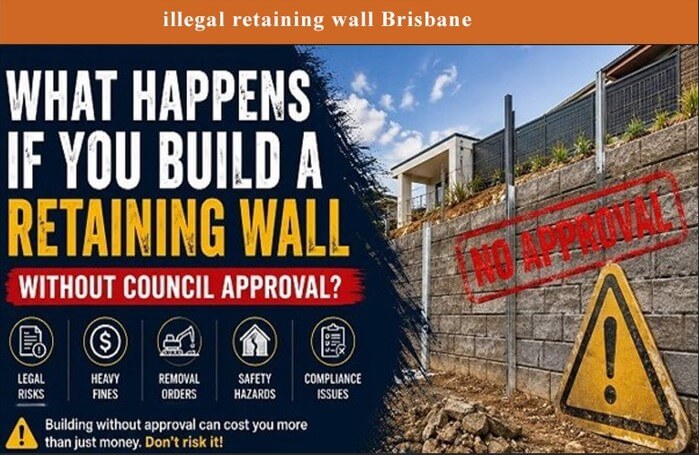
What Happens If You Build a Retaining Wall Without Council Approval?
Retaining walls play an essential role in creating safe, functional and attractive outdoor spaces. Whether you are levelling a sloping backyard, protecting your property from soil erosion or preparing land for landscaping, a properly designed retaining wall can add significant value to your home. However, one of the biggest mistakes homeowners make is assuming they can build a retaining wall without first checking whether retaining wall council approval is required.
Many people believe that retaining walls are minor landscaping features and therefore exempt from regulations. In reality, every project is different. Depending on the wall’s height, location, engineering requirements and local planning controls, you may need approval before construction begins. Failing to comply with retaining wall regulations can lead to legal notices, expensive rectification work, engineering costs, neighbour disputes and, in some cases, removal of the wall altogether.
If you are planning a retaining wall in South East Queensland, it is important to understand that Brisbane retaining wall regulations, Gold Coast retaining wall regulations and Ipswich retaining wall regulations all operate under Queensland legislation while also applying local planning requirements. Understanding these differences before construction begins can save thousands of dollars and prevent unnecessary delays.
At APTBuildGroup, we regularly assist homeowners who have unknowingly started projects without confirming approval requirements. Our experienced team works with clients throughout Brisbane and surrounding areas to ensure every retaining wall is designed, engineered and constructed in accordance with Australian Standards and applicable council requirements.
Do All Retaining Walls Require Council Approval?
The simple answer is no. Not every retaining wall requires approval, but every retaining wall should be assessed before construction starts.
Whether you need retaining wall council approval depends on several factors rather than a single rule. Local councils consider the wall’s structural impact, its location on the property, nearby buildings, drainage, engineering requirements and local planning overlays.
Some retaining walls can be built without formal development approval if they satisfy the relevant building legislation. Others require engineering certification, building approval or additional planning assessment.
Before beginning any retaining wall project, you should consider:
- The proposed wall height
- Soil conditions
- Property boundaries
- Drainage requirements
- Existing structures
- Vehicle loading
- Swimming pools
- Flood-prone land
- Heritage overlays
- Environmental constraints
Every property is unique, which is why professional advice is always recommended before construction.
Why Retaining Wall Regulations Matter
Many homeowners only think about compliance after receiving a complaint or council notice. Unfortunately, by then the project may already require expensive modifications.
The purpose of retaining wall regulations is not to make construction difficult. Instead, these regulations exist to ensure retaining walls remain structurally safe for homeowners, neighbours and the surrounding environment.
A poorly designed retaining wall can fail without warning. Soil movement, excessive water pressure and inadequate foundations can all contribute to structural collapse, potentially damaging homes, driveways, fences and neighbouring properties.
Professional compliance also helps ensure:
- Safe structural performance
- Proper drainage
- Long-term durability
- Reduced maintenance costs
- Protection of adjoining properties
- Compliance with Australian Standards
For these reasons, understanding retaining wall regulations should always be the first step before construction begins.
When Is Retaining Wall Council Approval Required?
One of the most common questions homeowners ask is whether their retaining wall requires council approval.
Unfortunately, there is no single answer because approval depends on the individual project.
Several factors determine whether retaining wall council approval may be required, including:
Retaining Wall Height Limits
One of the biggest considerations is retaining wall height limits.
Higher retaining walls place greater pressure on the surrounding soil and generally require more detailed structural design. As wall height increases, engineering requirements also become more important.
Rather than focusing only on height, councils also consider how the wall performs under expected loading conditions.
Boundary Retaining Walls
Retaining walls constructed close to property boundaries often require additional consideration.
Boundary walls can affect neighbouring land, drainage patterns and future development. Proper engineering and site assessment help minimise potential disputes while ensuring the structure performs safely.
Walls Supporting Buildings
Retaining walls located near houses, garages, swimming pools or other structures may require more detailed engineering because they support additional loads beyond soil pressure.
These projects often require professional design to ensure long-term structural stability.
Flood and Environmental Overlays
Properties located within flood-prone areas or environmental overlays may require additional planning assessment before retaining wall construction begins.
These requirements help protect waterways, vegetation and surrounding infrastructure.
What Happens If You Build a Retaining Wall Without Council Approval?
Ignoring approval requirements can become an expensive mistake.
Many homeowners assume that because construction has already started, council will simply overlook the project. Unfortunately, this is rarely the case.
If your retaining wall requires approval and you proceed without obtaining it, several consequences may follow.
Council May Issue a Compliance Notice
If council becomes aware of an unapproved retaining wall, they may issue a compliance notice requiring the property owner to demonstrate that the wall satisfies applicable legislation.
Depending on the circumstances, you may need to provide engineering reports, structural calculations, site inspections and additional documentation.
This process often costs considerably more than obtaining the correct approvals before construction.
Stop Work Orders
If construction is still underway, council may require work to stop immediately until compliance issues are resolved.
This can delay landscaping projects, building work and associated construction activities.
Delays also increase labour costs, equipment hire charges and project management expenses.
Engineering Assessments After Construction
One of the most expensive outcomes involves retrospective engineering.
If a retaining wall has already been completed, engineers may need to inspect foundations, reinforcement, drainage systems and structural components that are no longer visible.
In some cases, sections of the retaining wall must be excavated simply so engineers can verify compliance.
This often costs significantly more than arranging engineering before construction began.
Financial Penalties
Where applicable legislation has been breached, councils may issue financial penalties or require corrective action.
The actual outcome depends on the nature of the project, the council involved and whether the retaining wall presents a safety risk.
For this reason alone, obtaining professional advice before construction is always the more cost-effective approach.
Neighbour Complaints
Neighbour disputes are one of the most common reasons councils investigate retaining walls.
If your retaining wall changes drainage patterns, affects neighbouring land or creates safety concerns, adjoining property owners may contact council for investigation.
Resolving disputes after construction can become both stressful and expensive, particularly if modifications are required.
Property Sale Complications
Unapproved retaining walls can also create difficulties when selling a property.
Buyers often request building records, engineering documentation and evidence that major structures comply with applicable regulations.
Missing documentation may delay settlement or reduce buyer confidence, particularly where structural work has been completed without approval.
Can Council Require You to Remove the Retaining Wall?
In some situations, yes.
If an investigation determines that the retaining wall does not comply with relevant legislation or presents a safety risk, council may require rectification works before the structure can remain in place.
Depending on the circumstances, this could involve engineering upgrades, drainage improvements, partial reconstruction or, in more serious cases, complete removal and replacement.
The final outcome depends on the wall’s design, construction quality, engineering assessment and applicable local requirements rather than simply whether approval was obtained.
Read more
What Happens If You Build a Retaining Wall Without Council Approval? | Retaining Wall Regulations: Gold Coast vs Brisbane vs Ipswich | Retaining Wall Height Limits Part 1 | Retaining Wall Height Limits Part 2 | Retaining Wall Height Limits Part 3 | RPEQ Retaining Wall Brisbane