Retaining Wall Regulations: Gold Coast vs Brisbane vs Ipswich
Compare retaining wall regulations in Brisbane, Gold Coast and Ipswich. Learn about council approval, height limits and engineering requirements with APTBuildGroup.
Building a retaining wall is one of the best ways to improve sloping land, prevent soil erosion and create functional outdoor spaces. However, before starting any retaining wall project, it is essential to understand that retaining wall regulations vary between local councils. While Queensland follows the Queensland Development Code and the National Construction Code, each council may have its own planning requirements, property overlays and approval processes.
Whether you are planning a new retaining wall in Brisbane, the Gold Coast or Ipswich, understanding the relevant rules can save time, reduce costs and prevent expensive compliance issues. At APTBuildGroup, we help homeowners, builders and property developers design and construct retaining walls that meet Australian Standards while complying with local council requirements.
This guide compares Retaining Wall Regulations: Gold Coast vs Brisbane vs Ipswich, explaining the differences in council requirements, engineering certification, retaining wall council approval, retaining wall height limits, drainage standards and construction considerations.
Why Retaining Wall Regulations Differ Between Councils
Although Queensland has statewide building legislation, local councils administer planning schemes that consider local environmental conditions, flood risks, bushfire overlays, heritage areas and neighbourhood character. This is why retaining wall regulations may differ depending on where your property is located.
Before construction begins, property owners should understand:
- Local planning requirements
- Property boundary restrictions
- Engineering certification requirements
- Soil and drainage considerations
- Flood or environmental overlays
- Retaining wall council approval requirements
- Applicable retaining wall height limits
Understanding these requirements early helps avoid delays and ensures your retaining wall complies with all legal obligations.
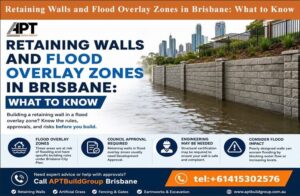
Brisbane Retaining Wall Regulations
When discussing Brisbane retaining wall regulations, homeowners should understand that approval requirements depend on several factors rather than height alone.
The Brisbane City Council assesses retaining walls based on location, structural impact, boundary placement, drainage and overall site conditions.
Many residential retaining walls can be constructed without development approval when they satisfy applicable building standards. However, larger structures or walls located in sensitive planning areas may require additional assessment.
Under Brisbane retaining wall regulations, property owners should consider:
- Site slope
- Wall height
- Distance from boundaries
- Drainage design
- Stormwater management
- Engineering certification
- Neighbouring properties
Professional site inspections help determine whether retaining wall council approval is required before construction begins.
Gold Coast Retaining Wall Regulations
Understanding Gold Coast retaining wall regulations is essential because many properties throughout the region are affected by steep terrain, waterways and environmental overlays.
Gold Coast properties often require additional consideration for:
- Coastal environments
- Flood-prone land
- Steep building sites
- Soil stability
- Drainage systems
- Erosion protection
Depending on the location and project scope, homeowners may require engineering certification and retaining wall council approval before construction.
Professional planning ensures retaining walls comply with local requirements while protecting neighbouring properties from drainage issues and structural movement.
Ipswich Retaining Wall Regulations
Ipswich retaining wall regulations are particularly important because many residential developments are located on sloping land with reactive clay soils.
Property owners should assess:
- Soil movement
- Drainage requirements
- Engineering design
- Boundary setbacks
- Structural loading
- Site classification
Many retaining walls require engineering drawings to ensure long-term structural performance.
When reviewing Ipswich retaining wall regulations, homeowners should also consider future landscaping, driveway construction and stormwater flow to avoid costly modifications later.
Retaining Wall Height Limits Across Brisbane, Gold Coast and Ipswich
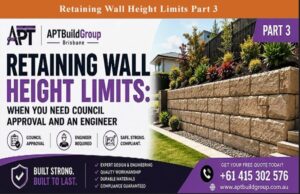
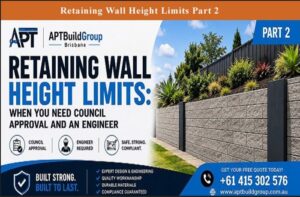
One of the most common questions homeowners ask concerns retaining wall height limits.
Although Queensland building legislation provides general guidance, the actual requirements depend on the project location, engineering design and local planning controls.
Higher retaining walls usually require more detailed engineering because increased soil pressure creates greater structural loads.
Several factors influence retaining wall height limits, including:
- Soil type
- Groundwater conditions
- Wall materials
- Foundation design
- Surcharge loads
- Vehicle loading
- Building proximity
Rather than relying solely on wall height, councils assess whether the structure can safely retain soil under expected loading conditions.
When Retaining Wall Council Approval May Be Required
Every homeowner should understand when retaining wall council approval may apply.
Approval requirements vary depending on:
- Wall height
- Location on the property
- Proximity to neighbouring land
- Flood overlays
- Easements
- Environmental constraints
- Heritage considerations
- Engineering requirements
If a retaining wall affects public infrastructure, stormwater systems or neighbouring properties, additional approvals may be necessary.
Seeking professional advice before construction helps avoid compliance issues and costly rectification work.
Engineering Requirements for Retaining Walls
Engineering certification is one of the most important aspects of modern retaining wall construction.
Professional engineers calculate:
- Soil pressure
- Structural loading
- Foundation stability
- Reinforcement requirements
- Drainage performance
- Wall deflection
- Long-term durability
Regardless of whether you are following Brisbane retaining wall regulations, Gold Coast retaining wall regulations or Ipswich retaining wall regulations, engineering certification provides confidence that the wall has been designed to Australian Standards.
Drainage Is Just as Important as the Wall
Many retaining wall failures are caused by poor drainage rather than poor construction.
Water trapped behind a retaining wall significantly increases soil pressure and can eventually cause movement, cracking or complete failure.
A properly designed drainage system may include:
- Agricultural drains
- Gravel backfill
- Geotextile fabric
- Drainage outlets
- Weep holes where appropriate
Effective drainage also supports compliance with local retaining wall regulations while extending the lifespan of the structure.
Choosing the Right Retaining Wall Material
Different retaining wall materials perform differently depending on soil conditions, project size and appearance.
Common options include:
- Concrete sleepers
- Timber retaining walls
- Reinforced concrete walls
- Natural stone retaining walls
- Concrete block retaining walls
- Rock retaining walls
Material selection should always consider local conditions and engineering requirements rather than appearance alone.
Brisbane vs Gold Coast vs Ipswich Comparison
| Requirement | Brisbane | Gold Coast | Ipswich |
|---|---|---|---|
| Local planning assessment | Yes | Yes | Yes |
| Engineering may be required | Yes | Yes | Yes |
| Drainage design important | Yes | Yes | Yes |
| Soil conditions considered | Yes | Yes | Yes |
| Flood overlays may apply | Yes | Yes | Yes |
| Boundary considerations | Yes | Yes | Yes |
| Retaining wall council approval may apply | Yes | Yes | Yes |
Although every council follows Queensland legislation, property-specific circumstances determine which approvals are required.
Common Mistakes Homeowners Make
Many retaining wall problems begin before construction starts.
Some of the most common mistakes include:
- Ignoring retaining wall regulations
- Assuming every council has identical requirements
- Not checking Brisbane retaining wall regulations
- Overlooking Gold Coast retaining wall regulations
- Forgetting to review Ipswich retaining wall regulations
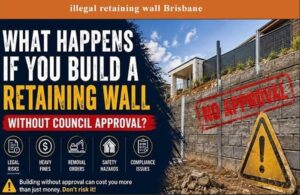
- Building without determining whether retaining wall council approval is required
- Exceeding recommended retaining wall height limits
- Using inadequate drainage
- Choosing unsuitable materials
- Hiring inexperienced contractors
Avoiding these mistakes protects your investment and helps ensure long-term structural performance.
Why Choose APTBuildGroup
At APTBuildGroup, we understand that every retaining wall project is unique. Our experienced team works with homeowners throughout Brisbane and surrounding regions to deliver retaining walls that are safe, durable and built to Australian Standards.
From the initial site inspection through to engineering coordination and construction, we help clients understand retaining wall regulations, identify whether retaining wall council approval is required and ensure compliance with local planning requirements.
Whether your project is located under Brisbane retaining wall regulations, Gold Coast retaining wall regulations or Ipswich retaining wall regulations, our team provides practical advice, quality workmanship and reliable project management from start to finish.
Final Thoughts
Compare retaining wall regulations in Brisbane, Gold Coast and Ipswich. Learn about council approval, height limits and engineering requirements with APTBuildGroup.
Understanding Retaining Wall Regulations: Gold Coast vs Brisbane vs Ipswich is one of the most important steps before starting any retaining wall project. While Queensland legislation provides the overall framework, local councils assess each project according to site conditions, planning controls and engineering requirements.
By understanding retaining wall regulations, reviewing Brisbane retaining wall regulations, Gold Coast retaining wall regulations and Ipswich retaining wall regulations, checking applicable retaining wall height limits, and determining whether retaining wall council approval is required, homeowners can avoid costly mistakes and ensure their retaining wall is built safely and legally.
If you are planning a retaining wall in Brisbane, the Gold Coast or Ipswich, the experienced team at APTBuildGroup can guide you through every stage of the project, from planning and engineering through to construction, helping you achieve a strong, compliant and long-lasting retaining wall.
Read more blogs
Retaining Wall Regulations: Gold Coast vs Brisbane vs Ipswich | Retaining Wall Height Limits Part 1 | Retaining Wall Height Limits Part 2 | Retaining Wall Height Limits Part 3 | RPEQ Retaining Wall Brisbane | Retaining Wall Regulations in Brisbane