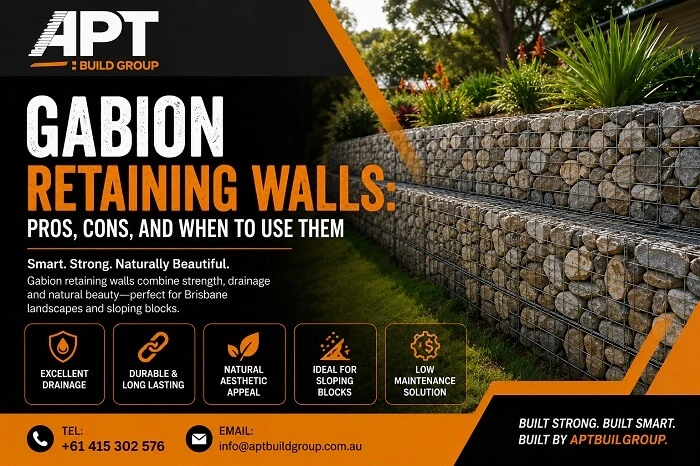
What Are Gabion Retaining Walls?
Gabion retaining walls are structures made from wire baskets or cages filled with rocks, stones or other suitable materials. They are designed to retain soil while creating a distinctive natural appearance that can complement gardens and landscaped areas. Gabion walls are increasingly considered for residential, commercial and landscaping projects where strength, drainage and visual appeal are important. Unlike conventional solid retaining walls, gabion structures have open spaces between the stones, allowing water to pass through naturally. This drainage characteristic can be particularly useful on suitable Brisbane properties. APTbuildgroup can help property owners determine whether a gabion retaining wall is appropriate for their site’s slope, soil conditions, drainage requirements and overall landscape design.
How Gabion Retaining Walls Work
A gabion retaining wall works by combining the weight and interlocking nature of stones with strong wire baskets to hold back soil. The baskets are positioned to create the required wall shape and then filled with appropriately sized rocks. As water moves through the spaces between the stones, hydrostatic pressure can be reduced compared with some solid wall systems. The wall’s stability depends on appropriate design, foundation preparation, basket construction, stone selection and installation methods. Gabion walls can be built in different configurations depending on the landscape and retaining requirements. Professional planning is important because factors such as wall height, soil pressure, ground conditions and drainage should be considered before construction begins.
Pros of Gabion Retaining Walls
One of the major advantages of gabion retaining walls is their natural drainage capability. Water can move through the rock-filled structure, potentially reducing water pressure behind the wall. Gabions can also provide a distinctive landscaping appearance because natural stone creates texture and visual interest. Another advantage is their flexibility, as the rock-filled baskets can accommodate some ground movement without behaving like a completely rigid structure. Gabion walls can also be useful for erosion control, garden landscaping and certain slope-management applications. Their appearance can be adapted by selecting different stone types and sizes. When properly designed and installed, gabion retaining walls can combine practical soil retention with an attractive outdoor feature.
Cons of Gabion Retaining Walls
Although gabion retaining walls offer several benefits, they are not suitable for every project. One consideration is their appearance, which may not suit homeowners looking for a smooth, contemporary retaining wall finish. Gabion structures can also require considerable space because their design and batter may take up more room than some vertical retaining systems. The quality of the wire baskets is another important factor, as unsuitable materials may not provide the required long-term performance. Stone selection, transportation and placement can also affect project costs. Taller or more complex gabion walls may require specialist structural design. Property owners should therefore assess the site’s requirements carefully before deciding whether gabions are the most appropriate retaining wall solution.
Gabion Walls and Brisbane Drainage
Drainage is an important consideration for retaining walls in Brisbane, and gabion structures naturally allow water to pass through the spaces between their stone fill. This open structure can be advantageous where managing water movement is an important part of the landscape design. However, natural drainage does not mean every gabion wall can be installed without additional drainage planning. Soil conditions, rainfall, slope, groundwater and surrounding landscaping still need to be considered. Appropriate foundations and construction methods are also essential for stability. APTbuildgroup can assess the proposed location and consider the site’s drainage characteristics before recommending a retaining wall approach. Proper planning helps ensure the finished structure works with the property’s natural water movement.
When Should You Use Gabion Retaining Walls?
Gabion retaining walls can be particularly useful when homeowners want a retaining structure that combines practical soil support with a natural landscape appearance. They may suit garden boundaries, landscaped slopes, erosion-control areas and selected residential projects where sufficient space is available. Gabions can also work well in landscapes featuring natural stone, native plants and other organic design elements. However, the suitability of a gabion wall depends on the individual site. Wall height, soil pressure, available space, access and drainage all influence the appropriate design. For properties with limited space or requirements for a smooth vertical finish, another retaining wall system may be more suitable. A site assessment should always guide the final choice.
Gabion Retaining Walls for Sloping Blocks
Sloping blocks can benefit from retaining walls because they allow sections of uneven land to be managed and potentially transformed into more usable outdoor areas. Gabion walls can be considered for suitable sloping properties where their width, weight and drainage characteristics work with the site. They may help support landscaped areas, garden terraces and changes in elevation. However, retaining a slope involves more than simply placing stone-filled baskets along the edge of a property. Soil pressure, foundation conditions, wall geometry and drainage must all be considered. APTbuildgroup can help Brisbane property owners evaluate whether gabion construction is appropriate for their sloping block and landscaping objectives before proceeding with installation.
Gabion Wall Design and Stone Selection
The appearance and performance of a gabion retaining wall depend significantly on the stone and basket system selected. Larger, durable stones are generally used to create stable fills, while the colour and texture can be chosen to complement the surrounding landscape. Natural stone can create a rustic appearance, while carefully selected uniform rock can provide a cleaner contemporary look. Basket size, wire quality and wall configuration should also be considered during planning. The final design should balance appearance with structural requirements rather than focusing solely on aesthetics. Landscaping elements such as plants, garden beds and pathways can be incorporated around gabion walls to create a cohesive outdoor space that suits the property’s existing environment.
Gabion Retaining Walls vs Other Materials
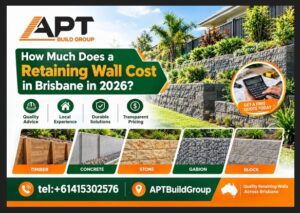
Gabion walls are only one of several retaining wall options available for Brisbane properties. Concrete sleepers can provide a clean, structured appearance and are popular where durability is a priority. Timber retaining walls can offer a warmer, natural appearance and may suit particular garden applications. Concrete block systems can provide substantial masonry structures when appropriately designed. Gabions stand apart because their stone-filled construction offers a highly textured appearance and allows water to move through the wall. The best material depends on the site’s conditions, available space, required wall height, landscape style and budget. APTbuildgroup can help compare suitable retaining wall options so homeowners can make a practical decision based on their individual project.
Is a Gabion Retaining Wall Right for You?
Gabion retaining walls can be an excellent choice for suitable Brisbane landscaping projects, particularly where natural aesthetics, drainage and a robust stone structure are desired. However, they are not automatically the right solution for every property. Available space, soil conditions, wall height, drainage, access and design preferences should all be assessed before construction. A professionally planned retaining wall can help improve the functionality of sloping land while adding an attractive landscaping feature. APTbuildgroup provides retaining wall solutions designed around individual site requirements and can help property owners explore whether gabions are appropriate for their project. Contact the team to discuss your retaining wall requirements and determine a suitable approach for your Brisbane property.
FAQs: Gabion Retaining Walls – Pros, Cons, and When to Use Them
1. What are gabion retaining walls?
Gabion retaining walls are structures made from wire baskets or cages filled with stones or rocks. The filled baskets are arranged to retain soil and manage changes in ground levels. Their open construction allows water to pass through the stone fill, making gabion walls a popular option for certain landscaping and erosion-control applications.
2. What are the main benefits of gabion retaining walls?
Gabion retaining walls offer several benefits, including natural drainage, durability, flexibility and a distinctive appearance. The stone-filled baskets can complement gardens and landscaped areas while providing effective soil retention when properly designed. They can also be suitable for erosion-control projects and selected sloping properties.
3. Are gabion retaining walls suitable for Brisbane properties?
Gabion retaining walls can be suitable for many Brisbane properties, depending on the site’s conditions and requirements. Factors such as soil type, slope, wall height, drainage, available space and access should be assessed before construction. A professional site assessment can help determine whether gabions are appropriate for your property.
4. Are gabion walls good for drainage?
Yes, one of the key advantages of gabion walls is their ability to allow water to move through the spaces between the rocks. This can help reduce water pressure behind the wall. However, proper site drainage and construction are still important to ensure the retaining wall performs effectively.
5. How long do gabion retaining walls last?
The lifespan of a gabion retaining wall depends on factors such as basket quality, wire coating, stone selection, installation and environmental conditions. Using suitable materials and professional construction can improve long-term performance. Regular inspection can also help identify damaged baskets or other maintenance issues early.
6. Are gabion retaining walls expensive?
The cost of a gabion retaining wall varies depending on wall dimensions, stone type, basket materials, site access, excavation and installation requirements. Although gabions can be cost-effective for some projects, transportation and placement of large quantities of stone can influence the overall price. A site-specific quote provides the most accurate estimate.
7. Do gabion walls require foundations?
Gabion walls generally require appropriate ground preparation, and the foundation requirements depend on the site’s soil, wall design and height. Proper preparation helps prevent excessive settlement and movement. Larger or more complex retaining walls may require engineering input to determine suitable foundations and construction methods.
8. Can gabion walls be used on sloping blocks?
Yes, gabion walls can be used for suitable sloping properties. They can help retain soil, create terraces and improve the usability of uneven outdoor areas. However, the wall must be appropriately designed for the slope, soil pressure, drainage and available space. Professional assessment is recommended for sloping sites.
9. What type of stone is used in gabion retaining walls?
Gabion walls can use various durable stones, depending on the design and availability. Common choices include natural rock and crushed or quarried stone of suitable size. The stone should be appropriately sized to remain securely within the baskets while providing the required weight and stability.
10. How do gabion walls compare with concrete sleeper retaining walls?
Gabion and concrete sleeper retaining walls offer different benefits. Gabion walls provide a natural stone appearance and excellent water permeability, while concrete sleepers offer a more structured and modern appearance. The best option depends on your property’s soil, slope, drainage, available space, design preferences and retaining requirements.