
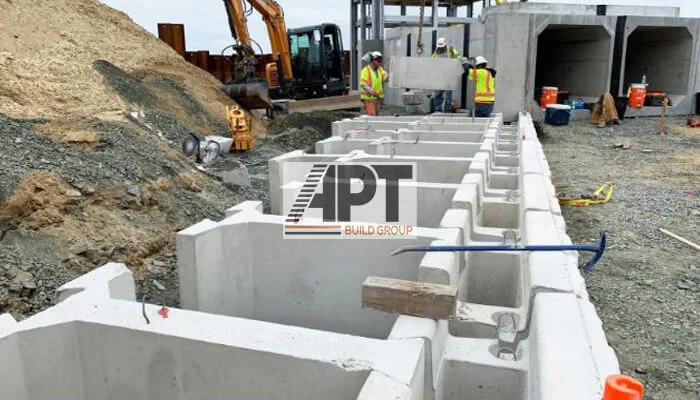
Semi Gravity Retaining Wall: Design, Function, and Applications
Introduction to Semi Gravity Retaining Walls
A semi gravity retaining wall is a widely used civil engineering structure designed to retain soil and resist lateral earth pressure. It combines the mass of concrete with light reinforcement to improve stability, making it more economical than full gravity walls while still offering high structural performance.
What Is a Semi Gravity Retaining Wall?
A semi gravity retaining wall is a concrete retaining wall that relies partially on its self-weight and partially on steel reinforcement to resist overturning, sliding, and bearing failure. Unlike pure gravity walls, it uses less concrete and achieves strength through optimized structural design.
Principle of Semi Gravity Retaining Walls
The working principle of a semi gravity wall is based on balancing lateral earth pressure using the wall’s weight and internal reinforcement. The additional reinforcement allows the wall to withstand higher loads with reduced thickness.
Difference Between Gravity and Semi Gravity Retaining Walls
Gravity retaining walls depend entirely on their mass, whereas semi gravity retaining walls use reinforcement along with self-weight. This makes semi gravity walls slimmer, lighter, and more cost-effective for medium-height applications.
Components of a Semi Gravity Retaining Wall
Key components include:
- Stem
- Base slab (heel and toe)
- Reinforcement steel
- Backfill material
- Drainage system
Each component plays a critical role in maintaining stability and durability.
Materials Used in Semi Gravity Retaining Walls
Common materials include reinforced cement concrete (RCC), steel reinforcement bars, granular backfill, and drainage pipes. The use of quality materials ensures long service life and structural safety.
Design Considerations for Semi Gravity Retaining Walls
Important design factors include:
- Soil bearing capacity
- Angle of internal friction
- Earth pressure theories (Rankine or Coulomb)
- Seismic forces
- Drainage provisions
Proper design prevents failure modes such as sliding, overturning, and excessive settlement.
Stability Analysis of Semi Gravity Retaining Walls
Stability checks include resistance against:
- Sliding
- Overturning
- Bearing capacity failure
Factor of safety calculations are essential to ensure structural reliability under various load conditions.
Construction Methodology
Construction involves excavation, foundation preparation, reinforcement placement, formwork installation, concrete pouring, curing, and backfilling. Skilled workmanship ensures structural integrity and performance.
Drainage System in Semi Gravity Retaining Walls
Drainage systems such as weep holes and filter media reduce hydrostatic pressure behind the wall. Effective drainage significantly enhances wall stability and lifespan.
Applications of Semi Gravity Retaining Walls
Semi gravity retaining walls are commonly used in:
- Highway and railway embankments
- Residential and commercial developments
- Bridge abutments
- Basement walls
- Landscaping projects
Advantages of Semi Gravity Retaining Walls
Some key advantages include:
- Reduced concrete consumption compared to gravity walls
- Cost-effective for medium-height retaining structures
- Higher load-carrying capacity
- Better structural efficiency due to reinforcement
- Suitable for limited space conditions
- Improved durability and service life
Limitations of Semi Gravity Retaining Walls
Despite their benefits, they require skilled design and construction, proper drainage systems, and quality control to avoid structural issues.
Maintenance and Durability
Regular inspection, proper drainage maintenance, and crack repair help maintain the wall’s strength and durability over time.
Conclusion
Semi gravity retaining walls offer an optimal balance between strength, economy, and constructability. Their efficient use of materials and adaptability make them a preferred choice for modern infrastructure and construction projects.
Read more blogs:
What Is a Cantilever Retaining Wall?
Semi Gravity Retaining Wall
Design Guidance and Considerations for Retaining Wall Construction 2026
Choosing the Right Retaining Wall 2026
Frequently Asked Questions (FAQs)
1. What is the typical height of a semi gravity retaining wall?
Semi gravity retaining walls are generally used for heights ranging from 3 to 8 meters.
2. Is reinforcement mandatory in semi gravity retaining walls?
Yes, light reinforcement is essential to improve structural stability and reduce wall thickness.
3. How is a semi gravity retaining wall different from a cantilever wall?
A semi gravity wall relies more on self-weight, while a cantilever wall primarily depends on reinforcement and bending action.
4. What type of soil is suitable for semi gravity retaining walls?
They perform well in soils with good bearing capacity and proper drainage characteristics.
5. Are semi gravity retaining walls cost-effective?
Yes, they are more economical than gravity walls for medium heights due to reduced concrete usage.
6. Do semi gravity retaining walls require drainage?
Absolutely. Drainage is critical to prevent hydrostatic pressure buildup.
7. Can semi gravity retaining walls be used in seismic zones?
Yes, with proper seismic design considerations and reinforcement detailing.
8. What causes failure in semi gravity retaining walls?
Common causes include poor drainage, inadequate design, and weak foundation soil.
9. How long do semi gravity retaining walls last?
With proper design and maintenance, they can last over 50 years.
10. Are semi gravity retaining walls suitable for residential projects?
Yes, they are commonly used in residential basements and landscaping applications.