Gravity Retaining Walls Explained 2026
Gravity Retaining Walls Explained 2026 – Introduction
The demand for durable and visually appealing retaining walls continues to grow across Brisbane and Queensland. In this Gravity Retaining Walls Explained 2026 guide, we explore one of the oldest yet most reliable retaining wall systems used in landscaping and construction. Gravity retaining walls are known for their strength, simplicity, and ability to provide long-term soil support without complex engineering systems.
At APTBuildGroup Brisbane QLD Australia, we work closely with homeowners, builders, and commercial property owners to design and construct retaining walls that suit local site conditions. Whether you are stabilising a sloped backyard, preventing erosion, or creating a functional outdoor space, gravity retaining walls remain a practical and effective solution.
Gravity Retaining Walls Explained 2026 – What Is a Gravity Retaining Wall?
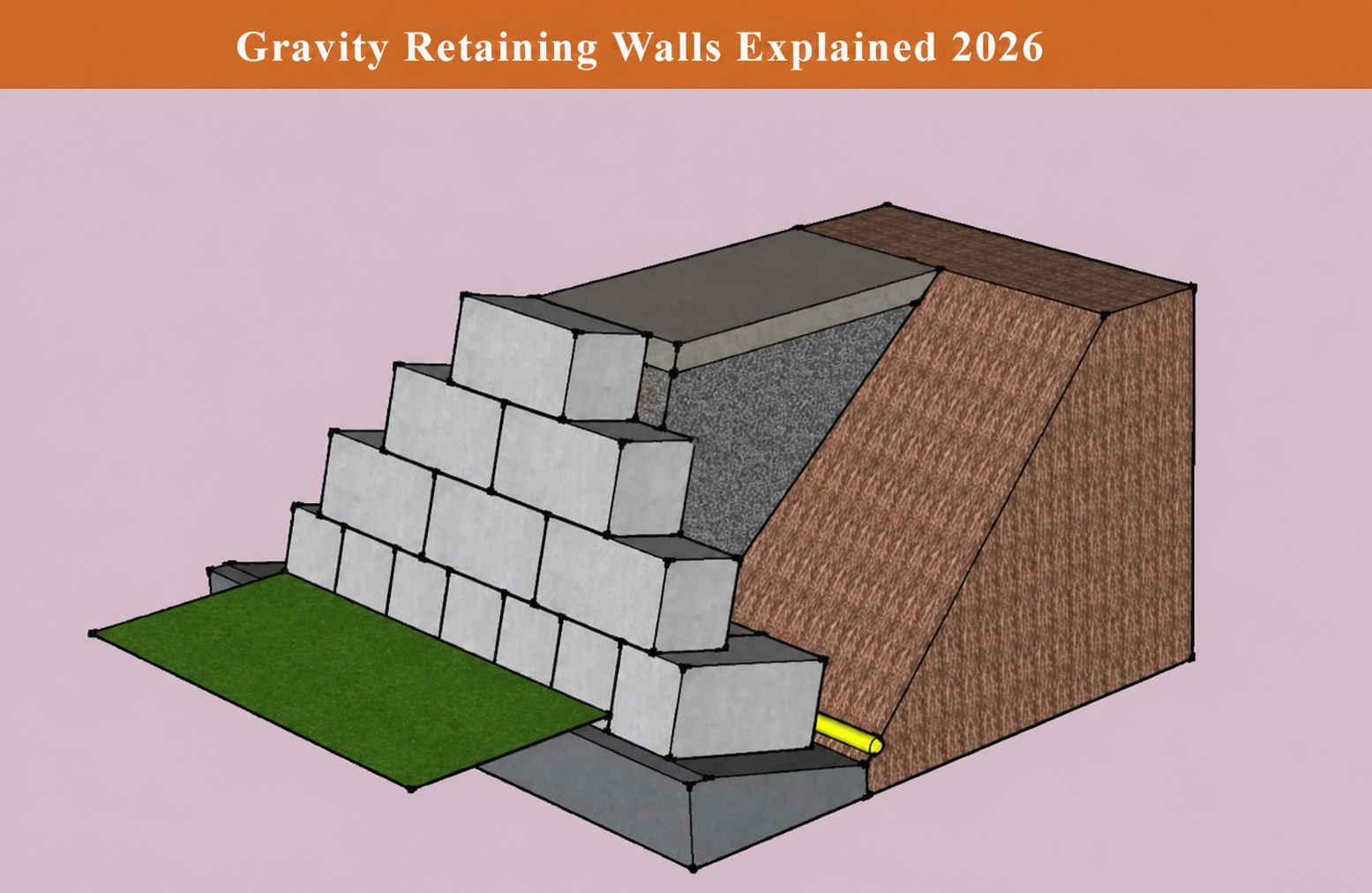
To understand Gravity Retaining Walls Explained 2026, it is important to know how this retaining wall system functions. A gravity retaining wall is a structure that resists soil pressure primarily through its own weight. Unlike cantilever walls that rely on reinforcement and leverage, gravity walls use mass and thickness to remain stable.
These walls are commonly constructed using materials such as concrete blocks, natural stone, rock, gabion baskets, or mass concrete. Their heavy design allows them to withstand the horizontal pressure created by retained soil.
At APTBuildGroup Brisbane QLD Australia, gravity retaining walls are often chosen for residential landscaping projects due to their versatility and natural appearance.
Gravity Retaining Walls Explained 2026 – How Gravity Retaining Walls Work
A key part of Gravity Retaining Walls Explained 2026 is understanding how these walls maintain stability. Gravity retaining walls rely on downward force generated by their weight to counteract lateral earth pressure.
When soil pushes against the back of the wall, the heavy structure resists movement by distributing weight into the foundation beneath it. This balance helps prevent sliding, overturning, and structural failure.
Proper wall thickness, foundation preparation, and drainage are essential for ensuring long-term performance. At APTBuildGroup Brisbane QLD Australia, we carefully calculate wall dimensions to match site-specific conditions.
Gravity Retaining Walls Explained 2026 – Common Materials Used
The Gravity Retaining Walls Explained 2026 guide would not be complete without discussing materials. Choosing the right material affects durability, appearance, and maintenance requirements.
Concrete blocks are one of the most popular options due to their strength and ease of installation. Natural stone offers a timeless and premium look, ideal for luxury landscaping projects. Gabion baskets filled with rock provide excellent drainage and are commonly used in erosion control. Mass concrete walls are suitable for larger structural applications.
At APTBuildGroup Brisbane QLD Australia, we help clients select materials that complement both functionality and design preferences.
Benefits of Gravity Retaining Walls
One of the most important aspects of Gravity Retaining Walls Explained 2026 is understanding the benefits of this retaining wall type.
Gravity retaining walls provide excellent stability because of their heavy construction. They are highly durable and can last for decades when built correctly. Their simple structural design makes them easier to construct compared to more complex retaining systems.
Another major benefit is design flexibility. Gravity walls can be created using different materials, textures, and finishes to match the surrounding landscape.
At APTBuildGroup Brisbane QLD Australia, gravity retaining walls are often recommended for clients seeking a balance between structural support and visual appeal.
Gravity Retaining Walls Explained 2026 – Ideal Applications
The Gravity Retaining Walls Explained 2026 guide highlights that gravity walls are suitable for a wide range of applications.
They are commonly used for residential landscaping, garden terraces, boundary support, erosion control, and decorative retaining structures. Gravity walls are also suitable for low to medium-height retaining projects where engineering demands are moderate.
For Brisbane properties with uneven terrain, gravity retaining walls provide an effective way to create level outdoor spaces while improving accessibility.
At APTBuildGroup Brisbane QLD Australia, we design retaining walls that integrate seamlessly with outdoor living areas.
Gravity Retaining Walls – Importance of Drainage
Proper drainage is a major factor in Gravity Retaining Walls Explained 2026. Even though gravity walls are strong, excessive water pressure can compromise stability.
When water builds up behind a retaining wall, hydrostatic pressure increases significantly. Without drainage, this pressure can push against the wall and cause movement or cracking.
Drainage systems typically include gravel backfill, drainage pipes, and geotextile fabrics. These components allow water to escape safely while protecting the wall from pressure buildup.
At APTBuildGroup Brisbane QLD Australia, drainage planning is integrated into every retaining wall project to maximise durability.
Gravity Retaining Walls Explained 2026 – Construction Process
The construction process is another important element of Gravity Retaining Walls Explained 2026.
The first step involves site preparation and excavation. A stable base is then created using compacted gravel or crushed rock. The retaining wall materials are carefully stacked or placed according to the design.
Each layer is installed with precision to maintain proper alignment and stability. Drainage systems are added behind the wall before backfilling is completed.
At APTBuildGroup Brisbane QLD Australia, we ensure every stage of construction meets high workmanship standards and complies with local building requirements.
Maintenance Requirements of Gravity Retaining Walls
Maintenance is an essential consideration in Gravity Retaining Walls Explained 2026. Although gravity walls are generally low maintenance, regular inspections help prevent long-term issues.
Property owners should monitor for signs of movement, drainage blockage, soil erosion, or vegetation growth. Keeping drainage systems clear helps maintain structural performance.
Routine maintenance ensures retaining walls remain safe and visually appealing for many years.
At APTBuildGroup Brisbane QLD Australia, we also provide guidance on retaining wall care and maintenance after installation.
Why Choose APTBuildGroup Brisbane QLD Australia
Choosing the right contractor is a key factor in the success of any retaining wall project. The Gravity Retaining Walls Explained 2026 guide would not be complete without discussing the importance of experience and expertise.
At APTBuildGroup Brisbane QLD Australia, we offer customised retaining wall solutions tailored to each site. Our team combines practical construction knowledge with engineering principles to deliver durable and attractive retaining walls.
We provide:
- Professional site assessments
- High-quality materials
- Custom retaining wall designs
- Reliable installation services
- Compliance with Queensland regulations
Our goal is to ensure every retaining wall performs effectively while enhancing property value.
Gravity Retaining Walls Explained 2026 – Conclusion
This Gravity Retaining Walls Explained 2026 guide demonstrates why gravity retaining walls remain one of the most dependable retaining solutions available today.
Their strength, flexibility, and long lifespan make them ideal for many residential and commercial applications across Brisbane and Queensland. With the right materials, drainage systems, and installation techniques, gravity retaining walls provide excellent support and visual appeal.
At APTBuildGroup Brisbane QLD Australia, we specialise in creating retaining walls that are built to last. Whether you are improving a sloped backyard or developing a large outdoor project, our team delivers retaining wall solutions designed for long-term performance and customer satisfaction.
FAQs – Gravity Retaining Walls Explained 2026
What is a gravity retaining wall?
A gravity retaining wall is a structure that holds back soil using its own weight and mass. Unlike reinforced retaining walls, gravity walls rely on heavy materials such as concrete blocks, stone, or gabion baskets for stability. At APTBuildGroup Brisbane QLD, we design gravity retaining walls that are both durable and visually appealing.
Where are gravity retaining walls commonly used?
Gravity retaining walls are commonly used in residential landscaping, garden terraces, sloped backyards, boundary support, and erosion control. APTBuildGroup Brisbane QLD installs gravity retaining walls for both small residential projects and larger commercial applications.
What materials are used in gravity retaining walls?
Gravity retaining walls can be built using concrete blocks, natural stone, rock, gabion baskets, and mass concrete. At APTBuildGroup Brisbane QLD, we help clients choose materials that suit both structural needs and property aesthetics.
How do gravity retaining walls stay stable?
Gravity retaining walls stay stable by using their own weight to resist soil pressure. The heavier the wall, the better it can counteract the force from retained soil. Proper foundation preparation and drainage are also essential for stability.
Are gravity retaining walls suitable for Brisbane conditions?
Yes, gravity retaining walls perform well in Brisbane conditions when properly designed and installed. APTBuildGroup Brisbane QLD assesses soil type, slope, and drainage requirements to ensure long-term performance.
Do gravity retaining walls require drainage?
Yes, drainage is very important. Without proper drainage, water pressure can build up behind the wall and cause movement or structural damage. APTBuildGroup Brisbane QLD includes drainage systems in every retaining wall project.
How long do gravity retaining walls last?
A professionally built gravity retaining wall can last 50 years or more depending on materials, maintenance, and drainage. APTBuildGroup Brisbane QLD focuses on quality workmanship to maximise durability.
Are gravity retaining walls cost-effective?
Gravity retaining walls are often cost-effective for low to medium-height projects because they have a simpler design compared to reinforced retaining systems. Costs vary depending on material choice and site conditions.
Do gravity retaining walls need council approval?
In Brisbane and Queensland, retaining walls above certain heights may require council approval and engineering certification. APTBuildGroup Brisbane QLD assists clients with compliance and approval processes.
Why choose APTBuildGroup Brisbane QLD for gravity retaining walls?
APTBuildGroup Brisbane QLD provides expert retaining wall design, premium materials, and professional installation services. Our team ensures every gravity retaining wall is built for strength, drainage efficiency, and long-term reliability.
Read more blog for the month of April 2026
Retaining Wall Designs Guide 2026 | Gravity vs Cantilever Retaining Walls 2026
Cantilever Retaining Walls Explained 2026 | Gravity Retaining Walls Explained 2026 | Semi Gravity Retaining Walls 2026 | Modern Colorbond Fencing Ideas 2026